82-0 Classic
Basic stats stay visible as you draft. Compare scoring, rebounding and playmaking before committing a player to the court.
- Player stats
- Visible
- Rerolls
- Two per run
- Best for
- Learning peak seasons
Play the free 82-0 game and build an NBA team from real player seasons. Draft five starters and a bench player, balance your lineup, then see if your team can finish 82-0.
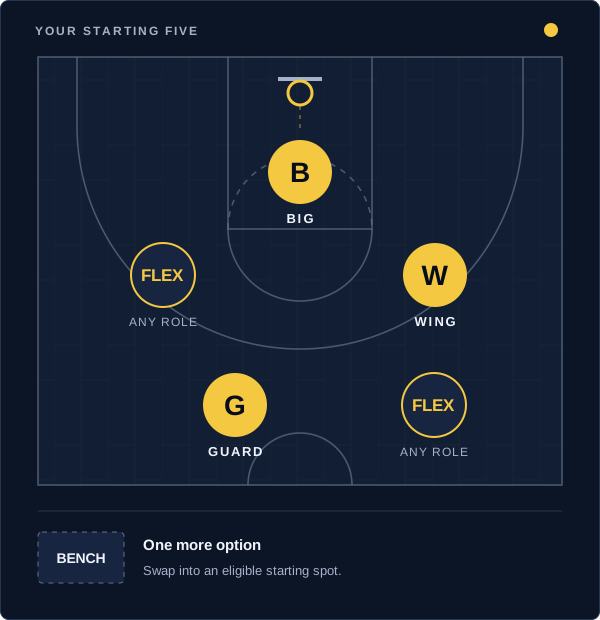
One guard. One wing. One big. Two flex spots.
Roll a team and a decade. Pick a player at their peak. Make six decisions that fit together.
Free to play · No sign-up needed01 / Learn the draft
Every 82-0 draft gives you six picks: five starters and one bench player. Work with the teams and decades you receive, then see how close your lineup comes to a perfect season.
Start with Classic to see player averages, try Ranked to draft from memory, or take on today’s shared Daily board. Each run asks you to fill the same five starting roles and one bench spot.
Your current pick gives you a team and an era. Search the available players, check their season and eligible roles, then place your choice into an open slot. Save your two rerolls for difficult decisions in Classic or Ranked.
Fill Guard, Wing and Big, plus two flexible positions. Complete your squad with a bench player. Before you finish, you can swap that player into a compatible starting spot to improve the lineup.
Finish your draft to reveal the season result and the factors behind it. Share the saved result, post a nickname to the leaderboard, or take your five into a tournament.
02 / Understand your result
Your 82-0 score starts with each player’s selected peak season for their team and decade. Game Quality, or GQ, compares performances with other players from the same week. The season’s median GQ provides the starting point for talent.
The comparison considers scoring, rebounds, assists, steals, blocks, made threes, turnovers and two shooting-efficiency measures. Your lineup then gains or loses ground through possession demand, outside shooting, passing, size, roles and defensive selections.

The result is a basketball simulation. It gives your draft a consistent challenge; it does not predict how a real NBA team would perform.
03 / Pick your test
Learn player seasons with the numbers in view, trust your basketball knowledge, or compare choices on a shared daily board.
Basic stats stay visible as you draft. Compare scoring, rebounding and playmaking before committing a player to the court.
Stats stay hidden until you finish. Remember who thrived on a particular team, and judge which season belongs in your five.
Everyone faces the same team-and-decade sequence. Hidden stats and no rerolls put the emphasis on your draft decisions.
04 / Think like a coach
Chasing 82-0 takes more than picking the biggest names. Check what your starting five still needs: a ball handler, outside shooting, passing or a stronger frontcourt.
Try a new lineupA versatile player can fill a specific role or a FLEX slot. Place them where they leave room for later picks. Guard, Wing and Big must each be covered, and the same person cannot appear twice.
Several high-volume scorers can compete for the same possessions. Combine creation with passing and outside shooting. A player who supports the other four may improve the record more than another big scoring average.
Compare the roles and strengths involved in a swap: which need does the bench player fill, and what does the outgoing starter contribute? The final five need to hold up together.
Across basketball history
This 82-0 game brings historical and modern players into the same NBA roster builder. A card’s season matters: you are choosing a particular version of a player, rather than combining everything they achieved in their career.
Early box scores have gaps. Some historical steals, blocks and turnovers are estimated, and older players can receive a three-point projection for lineup fit. Treat those fields as estimates rather than recorded totals. GQ compares performances within their own time, while the lineup model accounts for differences in pace.
Take your five further
Enter your completed 82-0 lineup in a 16-team tournament with best-of-seven series. Public brackets use saved player teams and labeled CPU teams to fill the field. To face friends, create a private room and share the invitation. The host starts the simulated bracket once the teams are ready; no account is required.
Your season result also has its own shareable link. Keep a strong lineup, compare records with friends, and use your next draft to test a different combination.
A few things before tip-off
The 82-0 game is a basketball draft game built around an undefeated 82-game season. Draft players from the team and decade you receive, fill five starting positions and a bench spot, then see the record your lineup earns. Talent, shooting, playmaking and lineup balance all contribute to the result.
The 82-0 game is free and needs no account or download. Play Classic, Ranked or Daily, share your result, post a nickname to the leaderboard, and enter public tournaments or invite rooms without signing in. To enter a tournament or room, first finish your own lineup. Posting a leaderboard score is optional.
Keep your result link to view or share the lineup. Guest drafts and room controls stay with the browser that created them, using a cookie. If you clear that cookie or change browsers, you can still view a saved result link, but you cannot resume its draft or manage its leaderboard entry and room as that guest.
Yes, when the team and decade on your board contain an eligible season for that player. The player pool includes historical and modern NBA seasons. You draft the season shown on the card, so a familiar name can have different strengths in different decades.
No. A player can appear only once in your six-player squad, even if another version comes from a different team or decade. Both FLEX spots and the bench accept any eligible role; the G, W and B spots require their matching roles.
Classic shows the available players’ basic box-score averages while you draft. Ranked hides those numbers until you lock your lineup, testing how well you know each player’s season. Both modes give you two rerolls. The season scoring rules are the same.
A new Daily board begins at midnight in the America/Los_Angeles time zone, including its daylight-saving changes. Everyone gets the same sequence of teams and decades for that date. Daily hides player stats and gives you no rerolls, so each choice matters.
The season score uses your five starters. Your bench pick gives you one more option: before locking the lineup, swap that player into a starting spot they are eligible to fill. Check the entire starting five after the swap, because solving one weakness can create another.
Player reputation is only part of a good draft. This NBA roster builder uses the selected peak seasons and checks how the five starters fit together. Too many players needing the ball, poor outside shooting, limited passing or an unbalanced lineup can reduce a strong team’s projected record.
A public bracket can include saved player teams and clearly labeled CPU teams that fill its remaining places. You can also create a private room, share its invitation and enter completed rosters with friends. The host starts that bracket; its games are simulated rather than played live.
Your next five are waiting
Want a football challenge? Try the 17-0 NFL game, draft a 17-0 Sleeper team, or explore all games.
Independent fan game. Not affiliated with the NBA, its teams or its players.